
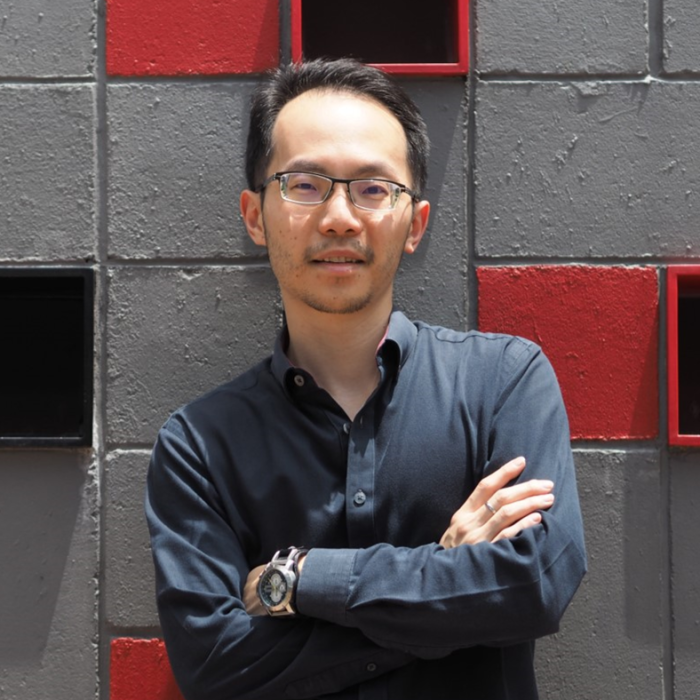
Representative-at-Large, Malaysia
Professor, Department of Psychology, HELP University, Malaysia
teeyj@help.edu.my
Webpage
https://university.help.edu.my/academic/eugene-yj-tee/www.emotivity.my
Education
PhD (Management) (University of Queensland)
Master of Applied Positive Psychology (MAPP) (University of Pennsylvania)
Bachelor of Business Management 1st Class Honours (Management & Organizations) (University of Queensland)
Introduction
Dr. Eugene Tee is Professor of Psychology and Chair of Ethics Review at HELP University, specializing in emotions and positive psychology. His has published in top-tier academic journals and books, including Emotion Review, Psychological Inquiry, The Leadership Quarterly, Asian Journal of Social Psychology, Journal of Affective Disorders, and The International Journal of Wellbeing. Eugene is a TEDx speaker, science communicator, and has conducted training for organizations including JP Morgan and The New Zealand High Commission. His books, The Science of Feelings (Revised Edition) and The Tyranny of Speed were awarded Reader’s Popular Choice and Best Social Sciences Book respectively at the 2025 National Book Awards. Eugene holds a PhD in Management from the University of Queensland and a Master of Applied Positive Psychology from the University of Pennsylvania. He is also a VIA Mindfulness-Based Strengths Practice (MBSP) Certified Practitioner and Certified Facilitator for the Reflected Best Self Exercise (RBSE).
Research Interests
Discrete Emotions and Affective Processes in Organizations (Emotions in Organizations)
• Discrete positive emotions within the context of positive organizational behaviour (POB)/positive organizational scholarship (POS) and/or negative emotions (e.g., malicious envy, fear/anxiety) and their influences on work and well-being outcomes.
• Affective processes and emotion-related skills in organizational contexts, including, but not limited to, the role of emotional contagion, emotional labour, empathy, and emotional intelligence, and their influence on work and well-being outcomes.
Human Flourishing and Optimal Functioning (Positive Psychology)
• Hedonic and eudaimonic well-being, with a focus on how elements within the PERMA model (positive emotions, engagement, relationships, relationships, meaning, and achievement) influence well-being.
• Strengths, skills, and traits that contribute to well-being, including character strengths, mindfulness, resilience, optimism, and their relationships with emotional, social, and psychological well-being.
Recent Publications
Tee, E.Y.J., Canggra, B.B., & Raja Reza Shah, R.I.A. (2025). Unpacking the emotional black box of the affective processes model. Psychological Inquiry, 36(3). https://www.doi.org/10.1080/1047840X.2025.2525684
Tee, E.Y.J. (2024). Enhancing emotional intelligence with the positive humanities: A narrative review and proposal for well-being interventions. Emotion Review, 16(3), 162-179. https://doi.org/10.1177/17540739241259564
Berndsen. M., Thomas, E. & Tee, E.Y.J. (2024). The impact of religious identification on national support and engagement in collective action to support Rohingya refugees. Asian Journal of Social Psychology, 27(4), 1-15. https://onlinelibrary.wiley.com/doi/10.1111/ajsp.12622
Tee, E.Y.J. & Raja Reza Shah, R.I.A. (2023). Self-transcendent emotions and their influence on organizational effectiveness: A literature review and synthesis. Asian Journal of Social Psychology, 26(1), 146-163. https://doi.org/10.1111/ajsp.12550